Archives
- 2026-06
- 2026-05
- 2026-04
- 2026-03
- 2026-02
- 2026-01
- 2025-12
- 2025-11
- 2025-10
- 2025-09
- 2025-04
- 2025-03
- 2025-02
- 2025-01
- 2024-12
- 2024-11
- 2024-10
- 2024-09
- 2024-08
- 2024-07
- 2024-06
- 2024-05
- 2024-04
- 2024-03
- 2024-02
- 2024-01
- 2023-12
- 2023-11
- 2023-10
- 2023-09
- 2023-08
- 2023-07
- 2023-06
- 2023-05
- 2023-04
- 2023-03
- 2023-02
- 2023-01
- 2022-12
- 2022-11
- 2022-10
- 2022-09
- 2022-08
- 2022-07
- 2022-06
- 2022-05
- 2022-04
- 2022-03
- 2022-02
- 2022-01
- 2021-12
- 2021-11
- 2021-10
- 2021-09
- 2021-08
- 2021-07
- 2021-06
- 2021-05
- 2021-04
- 2021-03
- 2021-02
- 2021-01
- 2020-12
- 2020-11
- 2020-10
- 2020-09
- 2020-08
- 2020-07
- 2020-06
- 2020-05
- 2020-04
- 2020-03
- 2020-02
- 2020-01
- 2019-12
- 2019-11
- 2019-10
- 2019-09
- 2019-08
- 2019-07
- 2019-06
- 2019-05
- 2019-04
- 2018-11
- 2018-10
- 2018-07
-
The effect of on the
2021-11-23
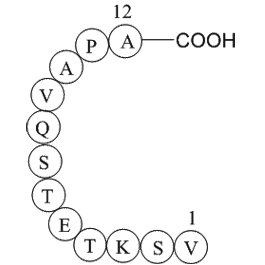
The effect of on the conformational of G-quadruplexes was investigated with circular dichroism (CD) spectroscopy. In the absence of , the CD spectra of parallel G-quadruplex exhibited a characteristic positive peak at about 265 nm, and a negative peak at about 240 nm; antiparallel G-quadruplex showe
-
Introduction Pneumocystis pneumonia PCP is a respiratory
2021-11-22
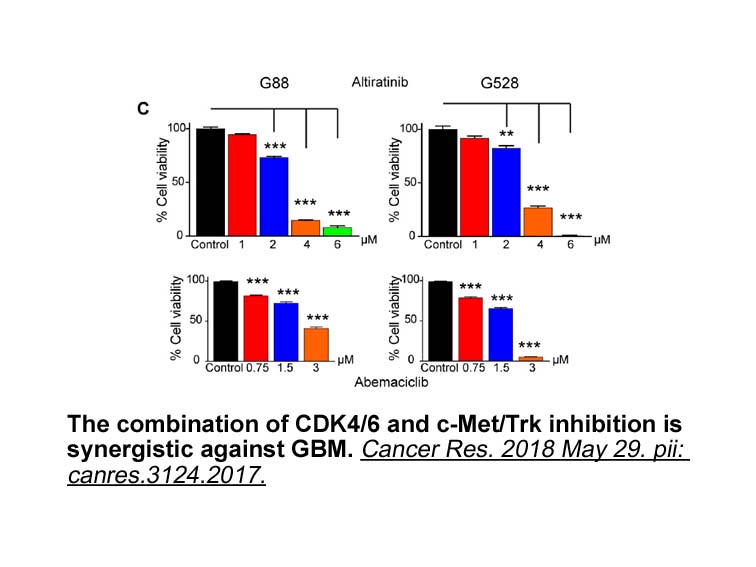
Introduction Pneumocystis pneumonia (PCP) is a respiratory invasive infection caused by Pneumocystis jirovecii, an ubiquitous fungus. It is transmitted by air and mostly infects immunocompromised patients. PCP is characterized by respiratory complaints of cough, dyspnea, but also tachycardia, low g
-
Several studies have reported that the genotype and allele f
2021-11-22
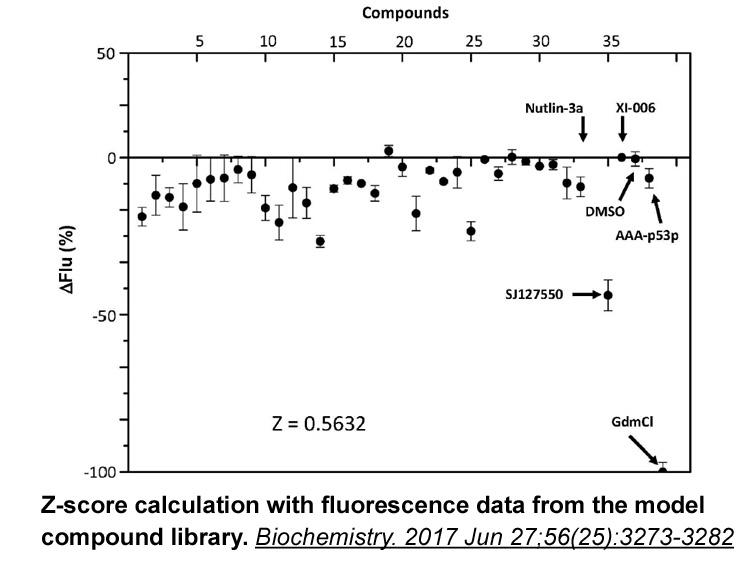
Several studies have reported that the genotype and allele frequencies of S267F vary considerably between different study groups and geographical regions (Ezzikouri et al., 2017, Hu et al., 2016, Lee et al., 2017, Li et al., 2014, Pan et al., 2011, Peng et al., 2015, Yang et al., 2016, Zhang et al.,
-
PDEs a group of metallophosphohydrolases
2021-11-22
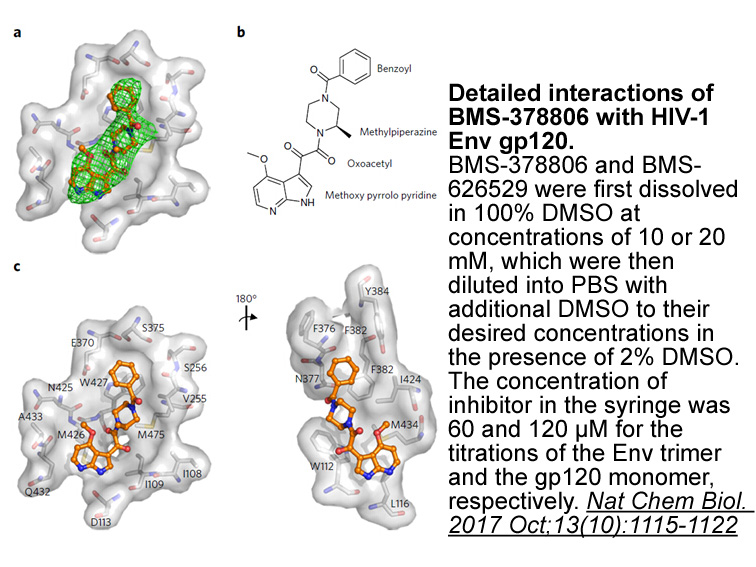
PDEs, a group of metallophosphohydrolases, hydrolyze the 3′,5′-cyclic phosphate group on cyclic nucleotides to a 5′-monophosphate, thereby blocking cyclic AMP (cAMP) or cGMP signaling [8,9]. There are different types of PDE isozymes, with different substrate specificities. PDE5 (specific to cGMP) an
-
At days and hours after MI the
2021-11-22

At 21 days and 24 hours after MI, the protein expressions of active JNK1 (P protein GS-7340 of p38 was down-regulated only at 21 days after MI (P Discussion This study demonstrates the role of GSTP1 in HF by inhibiting the TRAF2-induced MAPK activation and the potent inhibitory effect of GSTP1 o
-
Despite the association with asthma it is not
2021-11-22
Despite the association with asthma, it is not surprising that we did not find a relation between the percent predicted FEV1 and SNPs in GSNOR. FEV1 measured on a routine clinic visit is likely to be normal in most asthmatic children. FEV1 in children reflects a complex mix of factors in the growth
-
Several studies have proposed that high levels of KYNA
2021-11-22
Several studies have proposed that high levels of KYNA in the Castanospermine contribute to cognitive dysfunctions presented by patients who suffer from schizophrenia [30], [31], [32], [33]. Considering that: (i) KYNA is a known GPR35 agonist [2], (ii) cognitive impairments in patients with schizoph
-
Recently several groups reported that
2021-11-22
Recently, several groups reported that four orphan receptors, GPR40, GPR41, GPR43, and GPR120, can be activated by free fatty acids. Short-chain fatty acids are specific agonists for GPR41 and GPR43 . Medium and long-chain fatty acids can activate GPR40 and GPR120 . Our previous report showed that a
-
The cytoprotective effects of glyRs
2021-11-22
The cytoprotective effects of glyRs have been reported to associate with the MAPK (JNK, ERK1/2 and p38) signaling pathways [47], [48]. The present study reveals that suppressive phosphorylation of cRaf-MEK1/2-ERK1/2 is initiated by glycine – glyR α2 interactions in cardiomyocytes. As a central regul
-
46619 br Acknowledgements We thank LetPub www letpub com for
2021-11-22
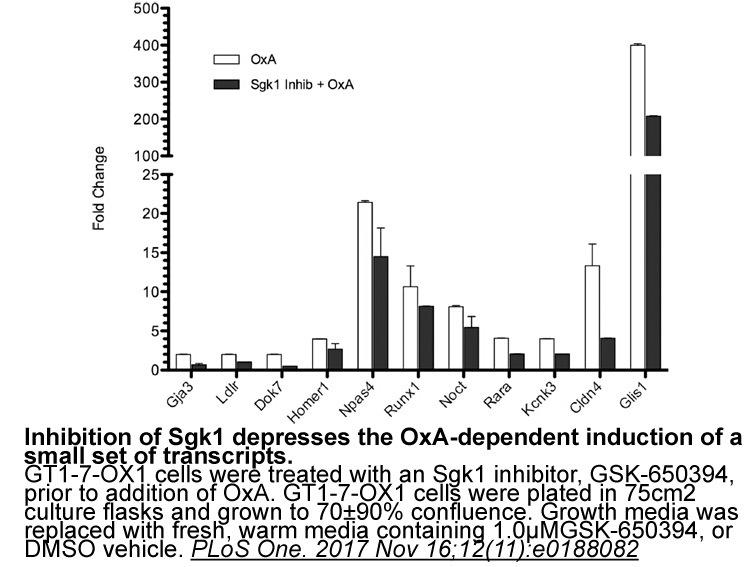
Acknowledgements We thank LetPub (www.letpub.com) for its linguistic assistance during the preparation of this manuscript. This work was funded by National Natural Science Foundation of Beijing (No. 7122187), and Special fund for clinical research of Chinese Medical Association (No. 13040700455).
-
The most ubiquitous serine threonine phosphatases
2021-11-22
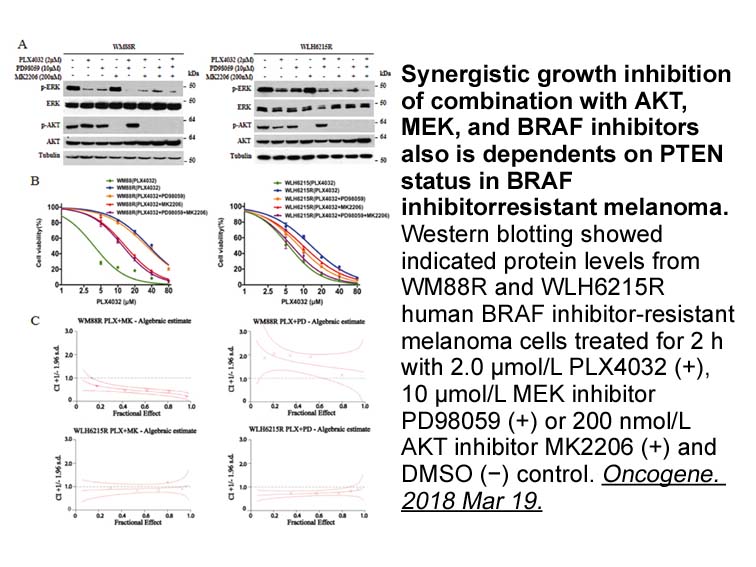
The most ubiquitous serine/threonine phosphatases, such as PP1, PP2A, and PP2B are known to contribute to the majority of phosphatase activity in the heart [4]. Dysregulation of these and other PPs have been found in numerous CVDs, including heart failure (HF), and may play a critical role in reduce
-
But some experiments did not support
2021-11-22
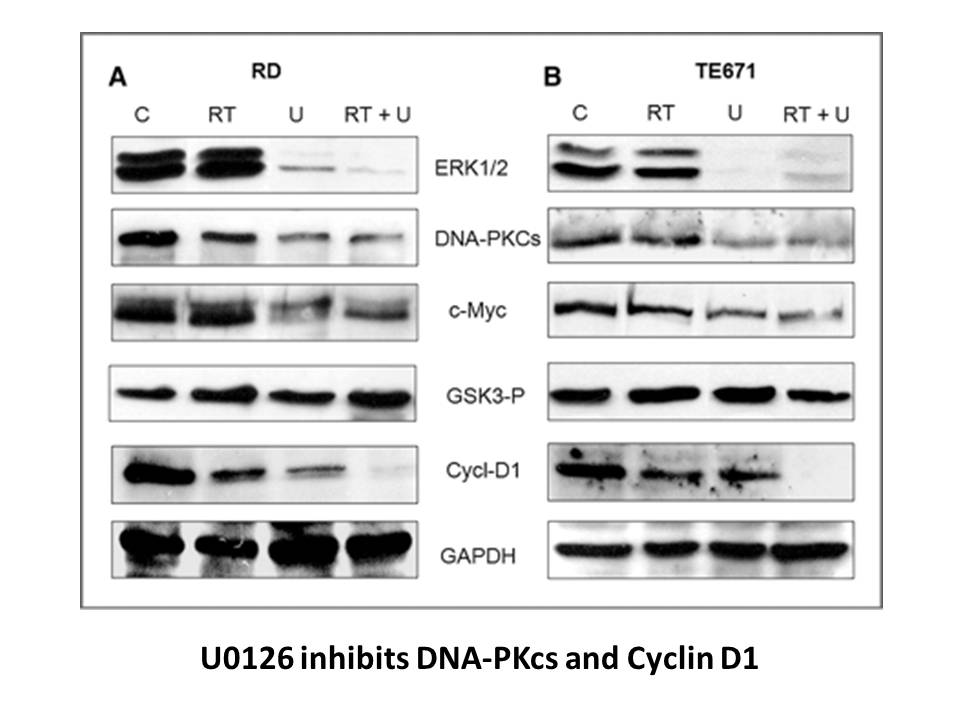
But some experiments did not support the antinociceptive role of GalR2 in peripheral locations beyond the DRG. The partial saphenous nerve ligation and the complete Freund's adjuvant model in the rats demonstrated that close intra-arterial infusion of galanin, but not galanin (2–11), reduced cooling
-
Endotoxin induced pulmonary hypertension is a reproducible
2021-11-20
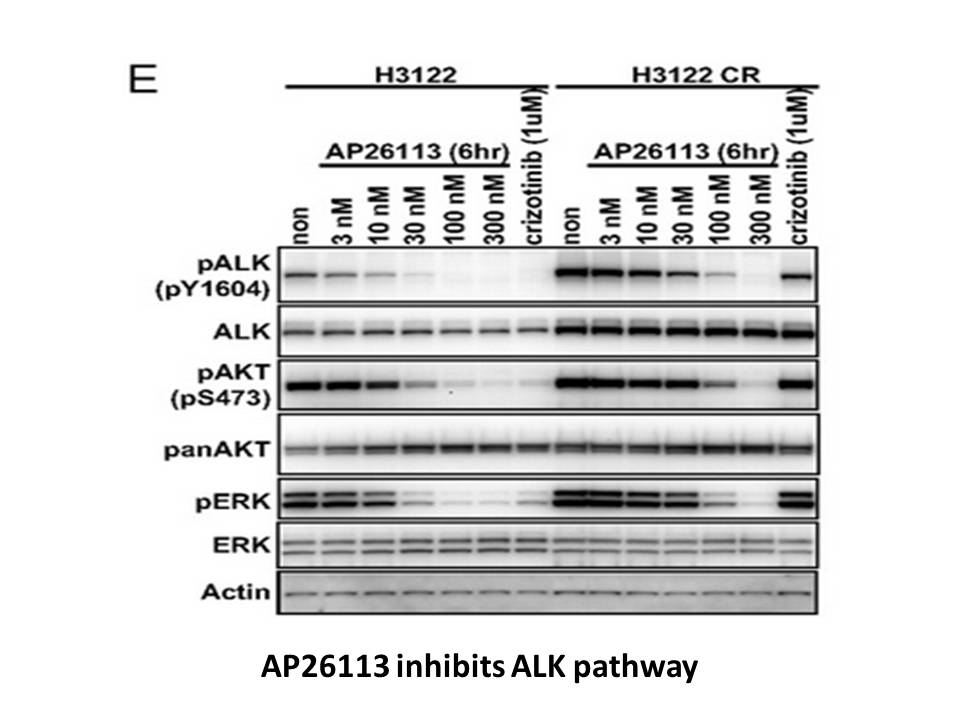
Endotoxin induced-pulmonary clobetasol price is a reproducible finding in various animal models Leeper-Woodford et al., 1991, Weitzberg et al., 1993 and is also a feature of human sepsis where it may affect right ventricular function (Vincent, 1998). Mechanisms such as vasoconstriction and leukocyte
-
br STAR Methods br Acknowledgments We thank P
2021-11-20
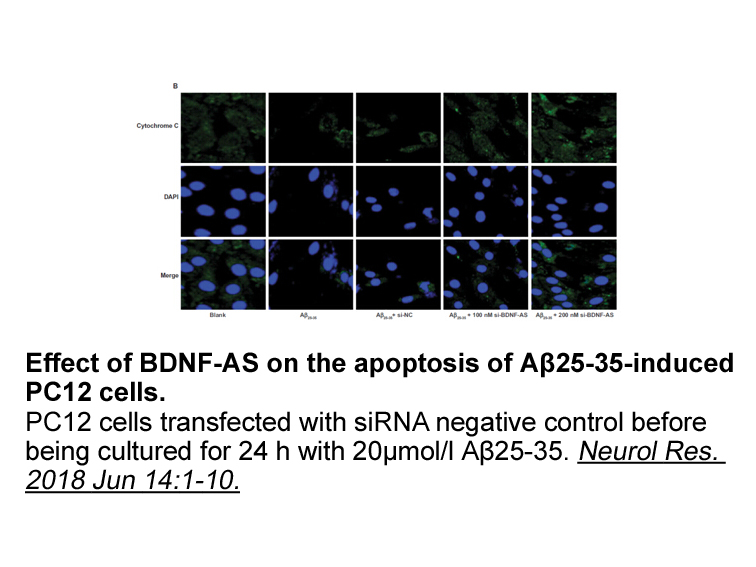
STAR★Methods Acknowledgments We thank P. Adler, V. Riechmann, N. Tapon, E. Knust, the Vienna Drosophila RNAi Center, the Australian Drosophila Research Support Facility (www.ozdros.com), the Bloomington Drosophila Stock Center, and the Developmental Studies Hybridoma Bank for D. melanogaster s
-
Several studies have found that GPR possesses
2021-11-20
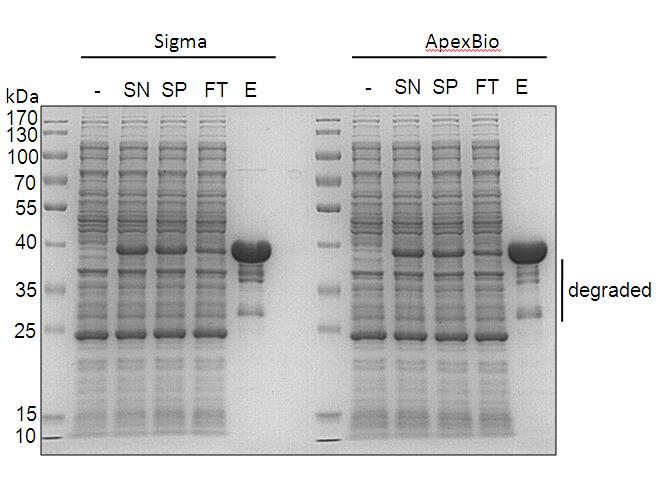
Several studies have found that GPR55 possesses a distinct pharmacology from that of CB1 and CB2, and that only certain cannabinoids act at this receptor. In transfected Cholera Toxin expressing hGPR55, out of more than 20 synthetic and endogenous cannabinoids evaluated, only 2 compounds, SR141716A
16646 records 580/1110 page Previous Next First page 上5页 576577578579580 下5页 Last page